

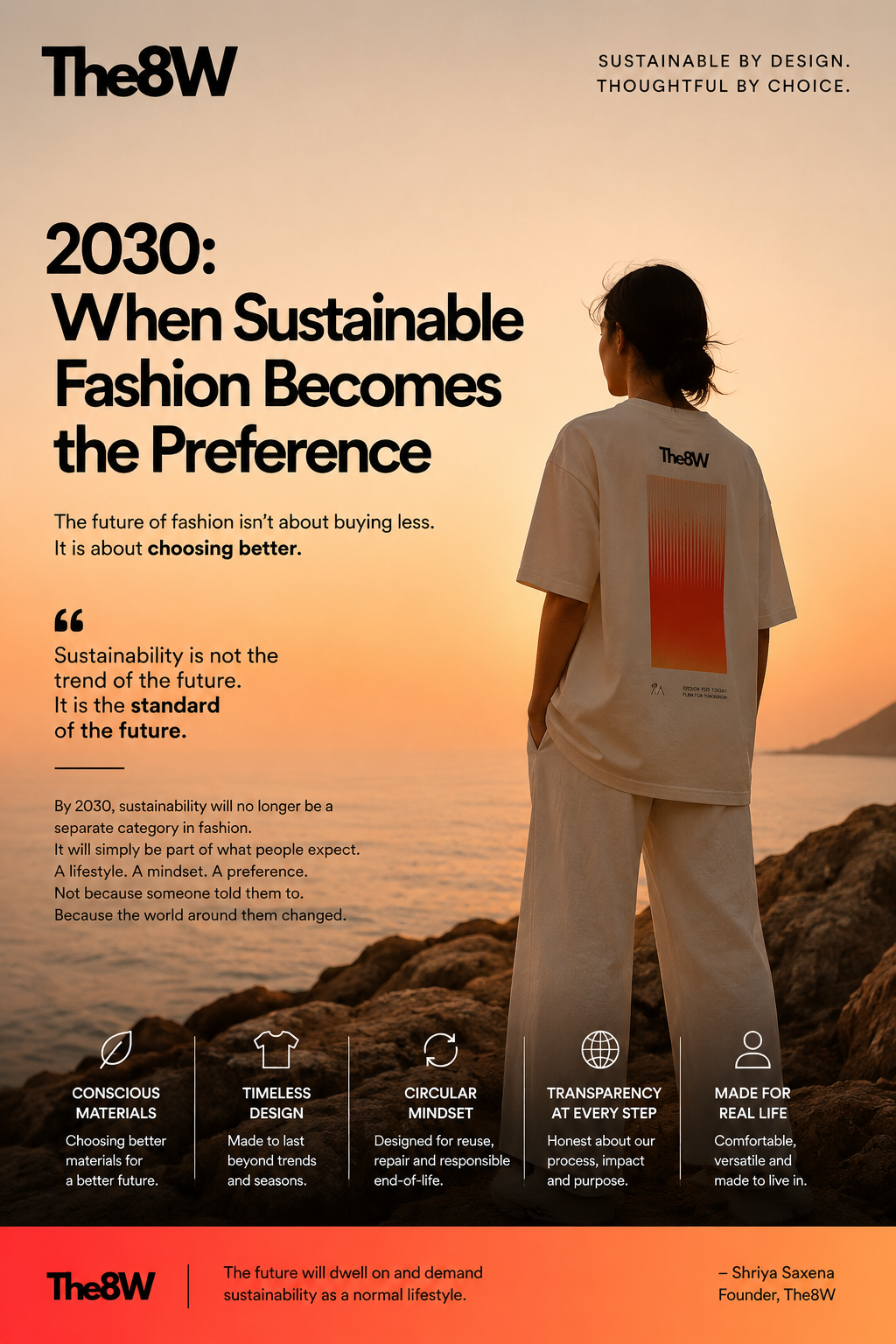
2030: When Sustainable Fashion Becomes The Preference
The future of fashion isn't about buying less. It is about choosing better.
“The future will not ask us to stop loving fashion. It will ask us to love it more consciously.”
By 2030, sustainability will no longer be a separate category in fashion.
It will simply be part of what people expect.
The question won't be, “Is this sustainable?”
It will be, “Why wouldn't it be?”
Fashion has always reflected the world around us. The next chapter will reflect a deeper awareness of what we consume, how products are made, how long they last, and what happens to them when we are done with them.
“Sustainability is not the trend of the future. It is the standard of the future.”
A new definition of fashion
The fashion industry of 2030 will look beyond trends.
Consumers will increasingly look for pieces designed to stay relevant beyond a season. They will value quality, longevity, responsible materials and thoughtful production.
A sustainable garment will not simply mean one made from recycled material.
It will mean considering the entire journey of a product — from material sourcing and manufacturing to packaging, logistics, everyday wear, repair, reuse and eventual disposal.
Sustainability will become a lifecycle, not a label.
“A garment should be designed not only for how it enters our wardrobe, but for how it leaves the world.”
The end of disposable fashion
The idea of buying something today and forgetting about it tomorrow will gradually lose its appeal.
People will want clothing that earns its place in their wardrobe.
A well-designed piece will be expected to live through years, different occasions and changing trends. Minimal silhouettes, timeless designs and durable materials will become increasingly valuable.
The future wardrobe may be smaller.
But it will be more intentional.
“The most sustainable piece may be the one you never need to replace.”
Technology will make transparency normal
By 2030, consumers will expect to know more about what they buy.
Where was it made?
What materials were used?
How was it produced?
How far did it travel?
Can it be repaired?
Can it be reused?
And what happens when its life as a garment comes to an end?
Technology will make much of this information easier to access, creating a fashion ecosystem where transparency becomes as important as aesthetics.
Because the future customer won't only look at the product.
They will look at the story behind it.
“Tomorrow's fashion will carry more than a price tag. It will carry a traceable story.”
Sustainability becomes a lifestyle
The biggest shift will happen when sustainability stops feeling like an additional effort.
It will become part of everyday decision-making.
Just as people already consider comfort, price, quality and design, sustainability will increasingly become another natural consideration.
Not because someone told them to.
Because the world around them changed.
“The greatest change will happen when sustainable choices no longer feel like choices — they feel normal.”
2030 and the new fashion preference
We believe 2030 can represent a turning point.
A world where fashion doesn't have to choose between beauty and responsibility.
Where design can be minimal without being ordinary.
Where clothing can be desirable without being disposable.
Where sustainability is considered from the first idea to the final stage of a product's life.
And where choosing sustainable fashion isn't a statement.
It is simply the preference.
“2030 is not about making sustainable fashion desirable. It is about making sustainability inseparable from fashion.”
The8W: Designing for that future
At the8w, we believe the future of fashion should be built around longevity, thoughtful design and sustainability across the entire product lifecycle.
We don't see sustainability as a trend.
We see it as the direction fashion is moving toward.
We imagine a world where every purchase considers not only what we wear, but what we leave behind.
“Fashion should leave an impression on people, not a burden on the planet.”
2030 is not a distant idea.
It is a direction we can begin building today.
The future will dwell on and demand sustainability as a normal lifestyle.
— Shriya Saxena
WHAT IS OEK - TEK® CERTIFIED DYES AND HOW THEY MATTER IN CONSCIOUS FASHION
In today’s world of fast-changing fashion, consumers are becoming more aware of what touches their skin. This is where OEKO-TEX® certified dyes come in — a global gold standard for safe, responsible, and skin-friendly color treatment in textiles. When a fabric uses OEKO-TEX® certified dyes, it means the material has been tested for harmful chemicals, toxins, and allergens, ensuring a cleaner and healthier experience for the wearer.
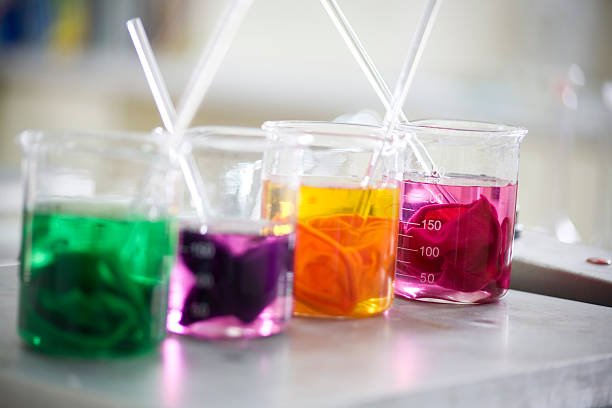
🌱 What Are OEKO-TEX® Certified Dyes?
OEKO-TEX® is an international testing system that evaluates textile chemicals to ensure they meet strict safety standards.
When dyes carry OEKO-TEX® certification, it confirms that they are:
Free from harmful substances like heavy metals
Skin-safe and hypoallergenic
Environmentally responsible
Compliant with global chemical safety standards
These dyes maintain color vibrancy without compromising human health or the planet.
💧 Why OEKO-TEX® Certified Dyes Are Important
1. Safe on Skin
The dyes undergo extensive testing to ensure they do not irritate or release harmful substances during wear.
2. Lower Chemical Impact
They avoid banned substances and restrict harmful chemicals, supporting a cleaner production process.
3. Better for the Environment
OEKO-TEX® dyes reduce pollution in water systems and lower chemical contamination during dyeing.
4. Preferred by Conscious Consumers
With growing awareness around toxic chemicals in textiles, OEKO-TEX® certification has become a trust mark for responsible fashion.
🧵 Why Brands Choose OEKO-TEX® Certified Dyes
Sustainable fashion brands like The8W use OEKO-TEX® compliant materials because they align with:
Eco-conscious manufacturing
Responsible sourcing
Skin-friendly clothing
Transparency and trust
It ensures every piece feels comfortable, safe, and ethically produced.
How Recycled Textiles Work
How Recycled Textiles Work: A Simple Guide to the Future of Sustainable Fashion
In a world where fashion changes faster than ever, recycled textiles have become one of the most important solutions for a cleaner, smarter, and more responsible future. Instead of letting old clothes, industrial scraps, and fabric waste end up in landfills, recycled textiles transform them into new, high-quality materials—reducing pollution, saving resources, and supporting conscious fashion brands like The8W.
This guide breaks down exactly how recycled textiles work, why they matter, and how they are shaping the next evolution of sustainable fashion.

🌱 What Are Recycled Textiles?
Recycled textiles are fabrics made by collecting, processing, and re-spinning pre-consumer waste (factory scraps) or post-consumer waste (used clothes). These textiles are repurposed into new fibers, yarns, and materials without needing fresh raw resources.
Types of textile waste reused:
Cotton scraps
Worn-out garments
Polyester bottles (PET)
Denim
Wool & wool blend waste
Industrial fabric leftovers
Each type of waste goes through a different recycling method, but the goal is the same:
turn waste into wearable, sustainable fashion.
♻️ How Recycled Textiles Are Made: Step-by-Step
1. Collection & Sorting
The recycling journey begins with large-scale collection of textile waste from:
Households
Thrift stores
Factories
Garment manufacturing units
Sorting is critical. Textiles are separated by:
Fiber type (cotton/polyester/wool)
Color
Quality
Material blend
Better sorting = cleaner and higher-quality recycled fiber.
2. Cleaning & Shredding
Once sorted, the fabrics are thoroughly cleaned to remove:
Dirt
Zippers
Buttons
Labels
Contaminants
After cleaning, the textiles are shredded into small pieces and then broken down into fibers.
3. Fiber Processing
The shredded material is processed with machines that:
Align fibers
Remove impurities
Strengthen the fiber quality
This stage determines how soft, durable, and spinnable the recycled fibers will be.
4. Re-Spinning into Yarn
The cleaned and processed fibers are then spun into new yarn.
Recycled cotton → cotton yarn
Recycled polyester (PET bottles) → polyester yarn
Blended waste → hybrid yarns
This yarn can now be used to weave or knit new fabrics.
5. Weaving or Knitting New Fabric
The yarn is woven into rolls of fabric that look fresh, modern, and high-quality, even though they originate from waste.
Brands that value sustainability prefer these fabrics because they drastically reduce environmental impact.
6. Dyeing or Non-Dyeing (Eco Advantage!)
One of the biggest strengths of recycled textiles is the non-dye option.
Since sorted materials already have colors, many recycled fabrics require:
No additional dye
Less water
Fewer chemicals
This reduces the environmental footprint even further.
7. Final Fabric Finishing
To enhance softness, stretch, and durability, recycled fabrics undergo:
Brushing
Washing
Compacting
Heat-setting
Then they are ready to be turned into clothing, accessories, home textiles, and lifestyle items.
🌍 Why Recycled Textiles Matter
1. Reduces Landfill Waste
Millions of tons of textiles end up in landfills each year. Recycling diverts this waste and reuses it.
2. Saves Water & Energy
Recycled cotton uses up to 90% less water than traditional cotton.
Recycled polyester uses up to 50% less energy than virgin polyester.
3. Cuts Carbon Emissions
Recycling reduces CO₂ pollution from farming, manufacturing, and dyeing.
4. Creates Circular Fashion
Instead of fashion ending in waste, recycled textiles create a loop where old becomes new.
5. Supports Conscious Consumers
Gen Z and mindful shoppers prefer brands that take responsibility for environmental impact.
👕 How The8W Aligns With Recycled Textiles
As a sustainable fashion brand with a mission aligned toward better fashion and better earth, The8W uses:
High-quality recycled materials
Minimal, timeless designs
Conscious production practices
Recycled textiles support The8W’s vision of comfort, classic silhouettes, and planet-positive fashion.

How Sustainability Is the New GenZ
It all begins with an idea.
Sustainability has become the new global shift because the world has finally waking up to a simple truth: the future depends on choices we make today. What was one a niche is now a mainstream idea revolution driven by awareness and technology.
Climate change, pollution , and waste have become impossible to ignore and consumers now hold brands accountable. Transparency,ethics, means of production are seen as modern standards. Sustainability has transformed into symbol of intelligence, responsiblity and style.
At its core , sustainability is the main thing as it represents a smarter, cleaner and more purposeful way of living.
Sustainability isn’t just a trend anymore, it’s a new normal - and the world is finally ready for it.
“And for sustainable choices, the world is ready now.”
Eco-conscious fashion - where style meets responsibility
It all begins with an idea.
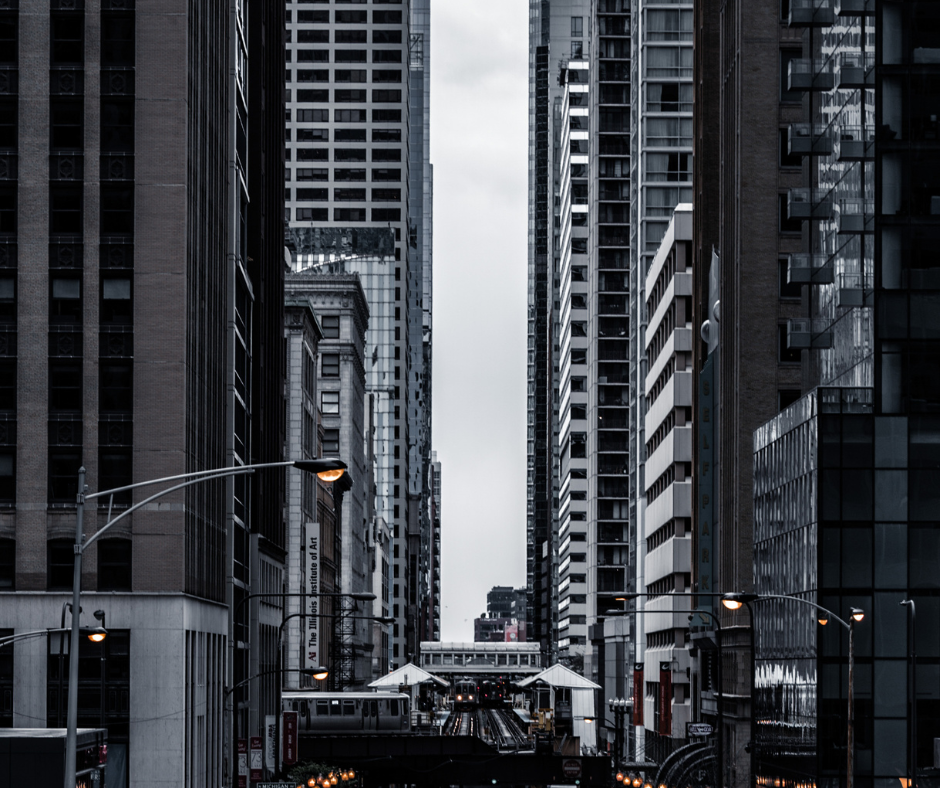
Eco-conscious fashion is no longer a quiet movement- it’s the new expression of elegance. As consumers demand transparency, brands are turning to sustainable materials , ethical factories, and low impact processes. The result? Clothing that looks good, feels good, and does good.
Today’s fashion-forward individual wants more than trends ; they want meaning. Eco-conscious fashion reflects this shift with timeless silhouettes, natural fabrics, and intentional design. It’s about choosing pieces that respect both the wearer and the world they live in.
This new wave of style celebrates minimalism, durability, and thoughtful consumption. Every purchase becomes a vote for the kind of future we want- one that’s clean,fair,and creative. And the more people adopt this mindset , the more powerful the movement becomes.
Eco-conscious fashion proves that sustainability is not the opposite of luxury - it is the evolution of luxury.

Circular Economy- The future Fashion can’t ignore
It all begins with an idea.
The fashion world is shifting and the next chapter isn’t about more production - it’s about smarter cycles. The circular economy is redefining how we create, wear, and value our clothing. Instead of a linear ‘ take- make-throw’ system, circular fashion builds a loop where materials live multiple lives.
What makes the circular economy powerful is its practicality. It doesn’t ask people to stop loving fashion - it asks them to love it differently. To care for their pieces, choose better fabrics, and support brands that build for longevity. It’s fashion with a conscience and a plan.
In a world drowning in textile waste , circularity is not just a solution- it’s the upgrade the fashion industry desperately needs.
“The circular fashion transforms garments into assets, not disposables.”